
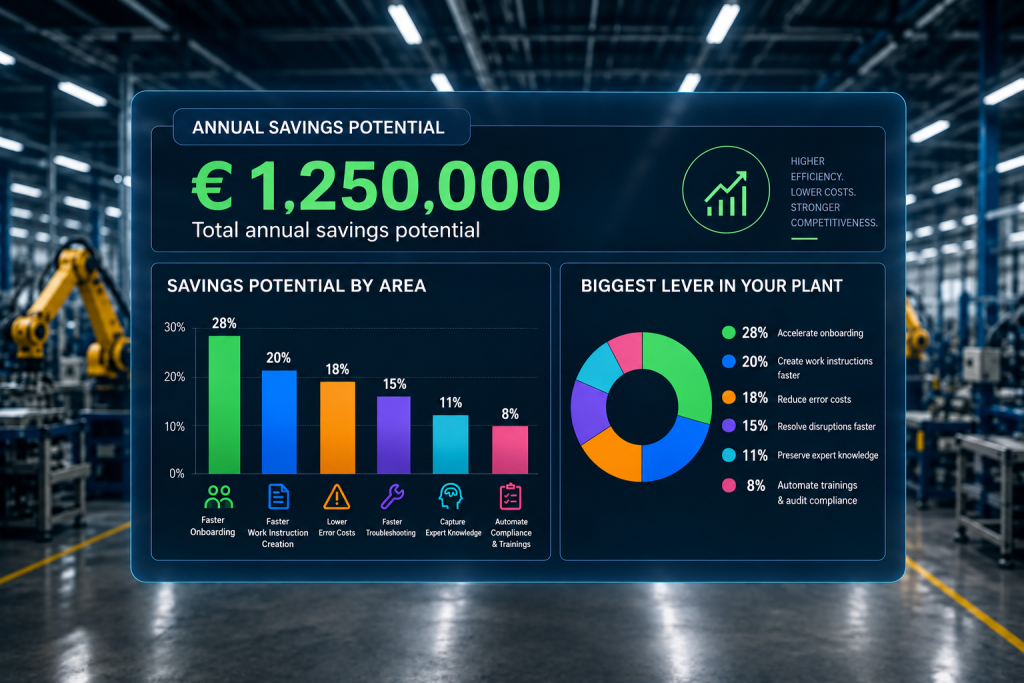
Free calculator for operations leaders
Free calculator for production leaders
Identify the biggest opportunities in your plant in just a few minutes and calculate the financial impact of faster onboarding, less time spent searching for information and shorter disruptions. Based on documented benchmarks and your own production data.
A new employee needs several weeks before they can perform their task safely and at the required level. A machine operator searches for the latest work instruction. When a known disruption occurs, troubleshooting starts from scratch because only one colleague knows how it was solved last time.
Individually, these are everyday situations in production. Across an entire plant and a full year, they quickly add up to significant costs.
The problem: These costs rarely appear as a separate line item in management accounting.
Anyone assessing the financial value of digital production knowledge, worker assistance or AI should therefore not begin with the price of software. A better starting question is:
KEY QUESTION
What does the current situation cost, and how much of it can realistically be avoided?
That is exactly why we developed the savings calculator. It examines six areas in which missing or hard-to-access production knowledge directly affects time, productivity and costs.
1. What does it cost before a new employee becomes truly productive?
‘Onboarding complete’ and ‘target performance achieved’ are not the same thing.
An employee may already be working independently but still take longer, ask questions more often or need support from an experienced colleague.
For assembly and inspection workstations, for example, four to eight weeks are often required to reach target performance. Digital worker assistance has been reported to shorten onboarding by 30 to 50 percent.
For your own business case, however, the figures from your own plant are what matter most:
Formula for calculating onboarding potential
Number of employees to onboard × onboarding time × productivity gap × realistically avoidable share
A simple example
If 30 employees are onboarded each year and each of them reaches the required productivity just five working days sooner, this creates:
There is also a second effect that is often overlooked: the time of supervisors, shift leaders and experienced colleagues. Every hour an expert spends repeatedly explaining the basics or answering questions is time that person cannot use elsewhere.
The key metric is therefore not:
‘How quickly did we train someone?’
It is:
‘How quickly does a new employee safely reach target performance?’
The financial impact:
Shorter time to competence and less time required from experienced employees.
How to assess this lever in your plant
Review the new hires and internal transfers from the past twelve months. Then determine how long, on average, these employees needed to reach the required level of independence and performance.
Even a conservative reduction of just a few days can create a meaningful capacity gain when staff changes regularly.
LEANBYTE IN PRACTICE
Get new employees to target performance faster
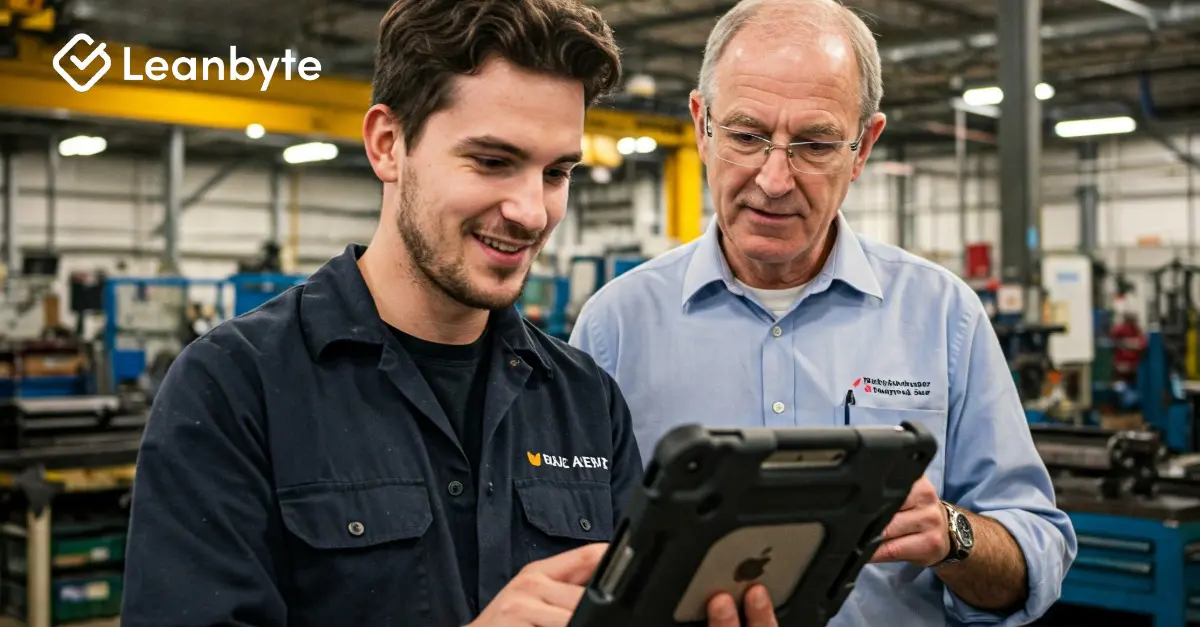
New employees often depend on experienced colleagues to learn processes, quality requirements and the specific details of their workplace.
Leanbyte provides work instructions, training and experiential knowledge directly at the workstation. This allows employees to learn more independently, ask fewer questions and become safely productive sooner.
2. Create and update work instructions faster
Define the process and consolidate knowledge
Create work steps, images and inspection points
Review and approve content
Update quickly when changes occur
A good work instruction consists of more than a few bullet points.
Processes must be captured, described, illustrated, formatted, coordinated, approved and later updated whenever changes occur.
With 120 new or revised instructions per year and several hours of work per document, the internal effort quickly becomes substantial. That is why the calculator asks both how many instructions you handle and how much time creating them currently takes.
AI changes this process.
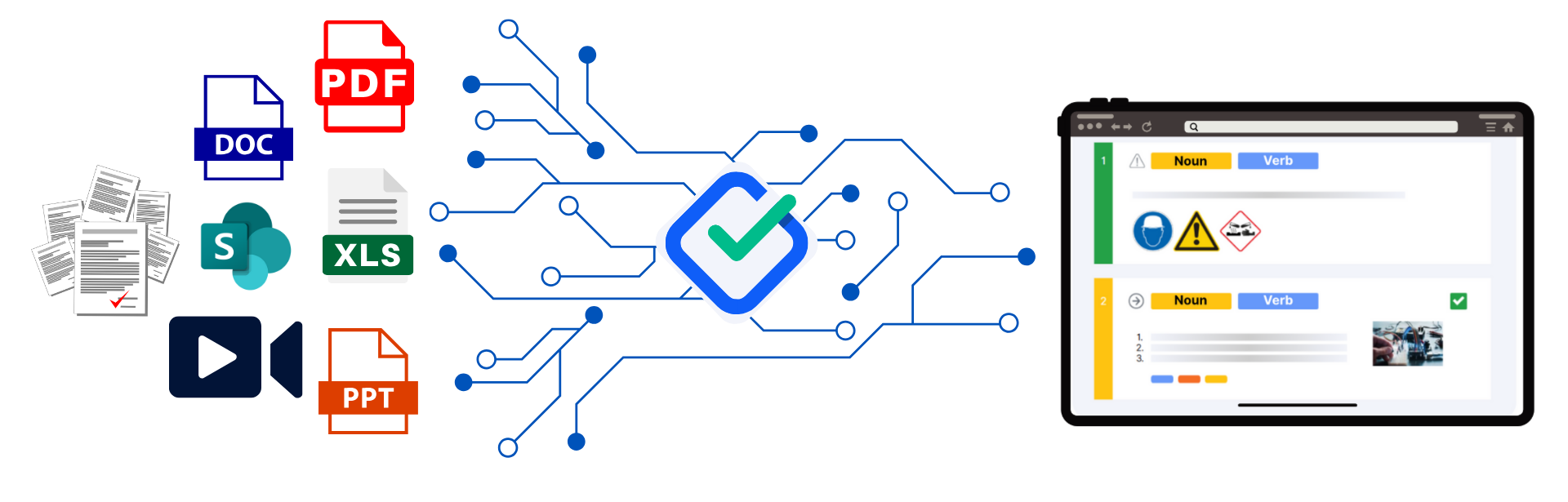
Instead of documenting a production process manually after the event, a video of the actual workflow can serve as the starting point. It can be turned into a structured draft containing work steps and inspection points.
The specialist remains responsible for review and approval, while the time-consuming manual creation work can be reduced considerably.
The financial impact:
Specialists spend less time on formatting and documentation and more time improving production.
Four hours per work instruction quickly add up
Assume that 120 work instructions are newly created or updated each year. At an average of four hours per instruction, that amounts to:
This is not just about writing. It includes consolidating process knowledge and technical requirements, creating and visualising content, coordinating stakeholders and obtaining approval.
With AI, technical files, existing documentation or videos can automatically be turned into structured drafts. The specialist reviews and approves them, while the manual creation effort is substantially reduced.
LEANBYTE IN PRACTICE
From process to digital work instruction
Much of the knowledge needed for onboarding already exists, but not in the right form. It is contained in videos, technical files, existing documentation or in the minds of experienced employees.
Leanbyte uses AI to turn it into digital, multilingual work instructions and training content. Existing knowledge becomes available for onboarding faster and no longer has to be explained again to every new employee.
A simple test for your plant
Take a few current work instructions and examine three questions:
How long does creation take? How many people are involved? How much effort does every update require?
This turns ‘documentation effort’ into a concrete metric: working time spent creating and maintaining work instructions.
3. Reduce the cost of quality failures
Production errors cost far more than the defective component alone.
Additional costs may include:
- Scrap and rework
- Sorting operations
- Customer complaints
- Expedited deliveries
- Production delays
- Goodwill costs and, where applicable, contractual penalties
These costs of poor quality can represent a significant share of revenue.
However, not every production error can be prevented through better qualifications or work instructions. Material defects and technical failures do not disappear because documentation improves.
That is why the Leanbyte calculator deliberately uses conservative assumptions. It first considers the total cost of quality failures, then only the share that can be addressed through people, methods or missing standards, and finally applies only a small avoidable proportion.
This is precisely where standardised workflows, visual inspection points and digital worker assistance systems can make a difference.
Employees see not only what they need to do, but also how to do it and which quality criteria must be met at a particular process step.
The financial impact:
Even small percentage improvements can create substantial value at high production volumes.
Production errors quickly become expensive
Assume a production site with €100 million in annual revenue and quality failure costs equal to 3% of revenue. This results in:
Not every error can be prevented through better standards. Material and machine failures remain. However, some errors arise from missing information, inconsistent processes or standards that have not been communicated effectively.
Digital work instructions, worker guidance and digital inspection records help employees follow standards while carrying out the work. Even a small reduction in the addressable share of errors can therefore have a meaningful financial impact.
LEANBYTE IN PRACTICE
Follow standards and prevent errors
Many production errors do not occur because knowledge is missing, but because standards are not communicated clearly or are unavailable at the moment they are needed.
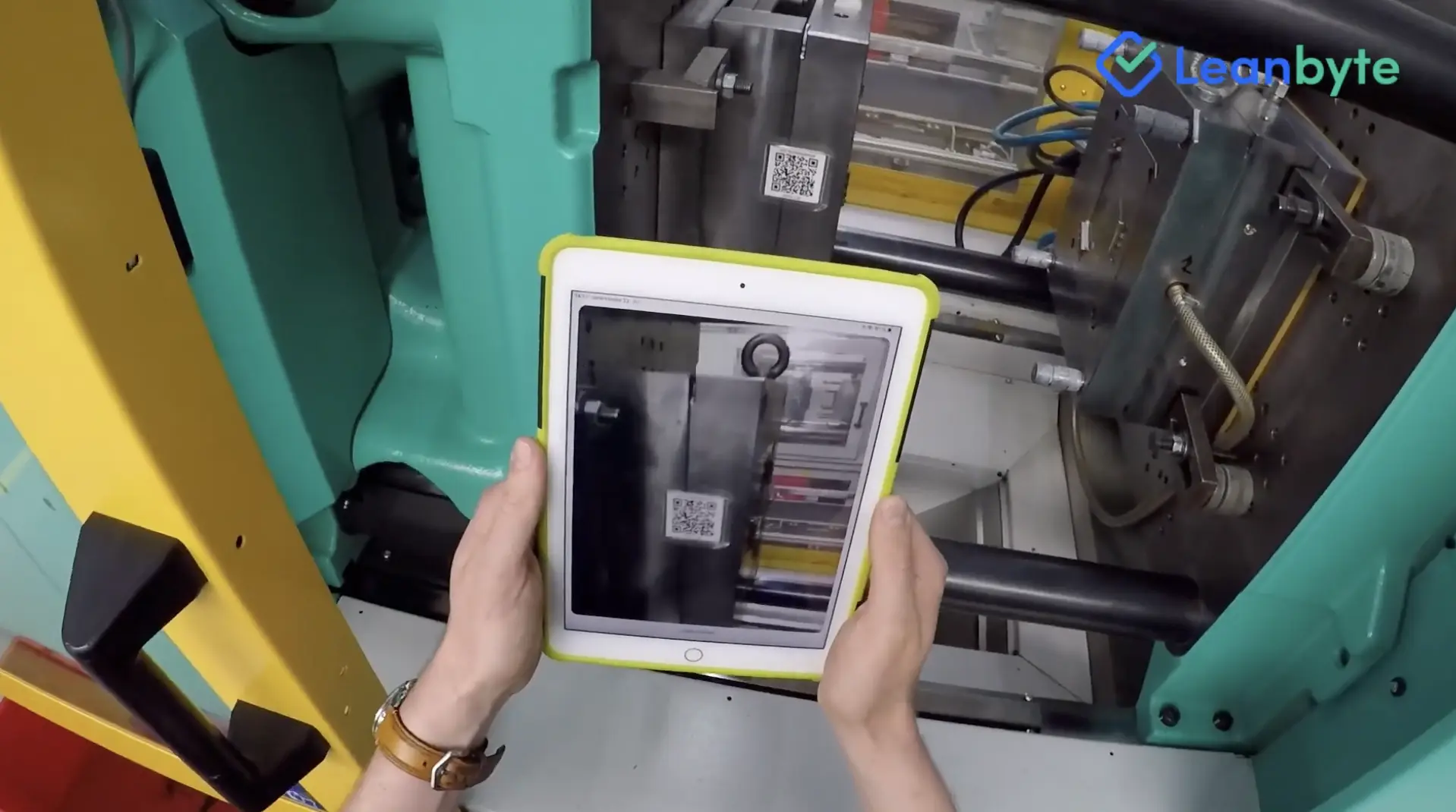
Leanbyte provides current work instructions directly at the workstation and guides employees through the process with clear work steps, images and inspection points. Deviations are detected earlier and quality standards are followed more consistently.
A simple test for your plant
Review a few typical production errors from recent weeks and examine three questions:
How often does the error occur? What does it cost in scrap or rework? Could a clear standard or inspection point have prevented it?
This turns ‘quality problems’ into a concrete metric: avoidable quality failure costs caused by missing or poorly followed standards.
4. What is the value of resolving a disruption 15 minutes faster?
The value of production knowledge becomes especially clear during disruptions.
A machine stops. An experienced employee recognises the problem immediately because they have solved the same disruption before.
The next time it occurs, that employee is not on shift. Diagnosis starts from scratch.
- What does the error code mean?
- Has this problem occurred before?
- What caused it last time?
- Who knows this machine?
- Which action worked last time?
The company already had the solution.
It was simply not available at the critical moment.
Part of the mean time to repair is therefore caused not by the repair itself, but by diagnosis and information retrieval.
For more complex equipment, MTTR values of one to four hours are common. Digital assistance can reduce the share spent on diagnosis and searching for information.
Four figures are enough for an initial financial assessment:
The financial impact:
Shorter diagnostic times and less unplanned downtime.
It does not have to be hours
The business case should not assume that a knowledge solution will prevent an entire stoppage.
Use a more conservative assumption.
What would the impact be if an employee found the known solution to a recurring disruption just 15 minutes sooner?
With 200 recurring disruptions per year, that would mean:
Only then should you multiply this figure by the actual downtime costs of your equipment.
LEANBYTE IN PRACTICE
Do not solve the same known disruption twice
Leanbyte makes documented errors, causes and solutions easy for employees to find again. Existing experiential knowledge can be reused across shifts, teams and sites instead of restarting troubleshooting every time.

5. Preserve experiential knowledge before it leaves the company
Demographic change is increasingly turning production knowledge into a financial risk.
Not every departing employee is equally critical. What matters most are the people about whom a company already knows:
If this person were gone tomorrow, we would lose essential knowledge.
They may be experienced setters, maintenance technicians, supervisors or long-serving line leaders.
The calculator therefore considers the share of older employees, expected retirements and, more specifically, the proportion of critical knowledge holders.
Here too, it would be unrealistic to assume that 100% of experiential knowledge can be documented.
Dexterity, intuition and the familiar ‘I can tell what is wrong with the machine just by its sound’ can only be digitised to a limited extent.
What can be captured includes manual techniques, sequences, typical fault patterns, known causes, inspection steps and proven solutions.
The calculator therefore explicitly includes only the share of knowledge that can realistically be preserved.
The financial impact:
Critical know-how remains available and does not have to be rebuilt from scratch after an expert leaves.
Experiential knowledge leaves with employees
Assume a workforce of 300 production employees. If 25% are between 55 and 65 years old, approximately the following number reach retirement age each year:
Not all of them are critical knowledge holders. Experienced setters, maintenance technicians and line leaders are particularly important because their knowledge of machines, fault patterns and special cases is often only partly documented.
When such a person leaves, the company loses more than labour capacity. Other employees must painstakingly rebuild that experiential knowledge.
LEANBYTE IN PRACTICE
Preserve experiential knowledge before it is lost
Much of the production knowledge that matters most resides in the minds of experienced employees: manual techniques, fault patterns, solutions and machine-specific details.
Leanbyte helps capture this knowledge in a structured way with little effort and uses AI to turn it into work instructions, training content and reusable production knowledge. It remains available even after experienced employees leave the company.

6. Automate training, qualifications and audit records
Another cost block is easy to overlook in day-to-day operations.
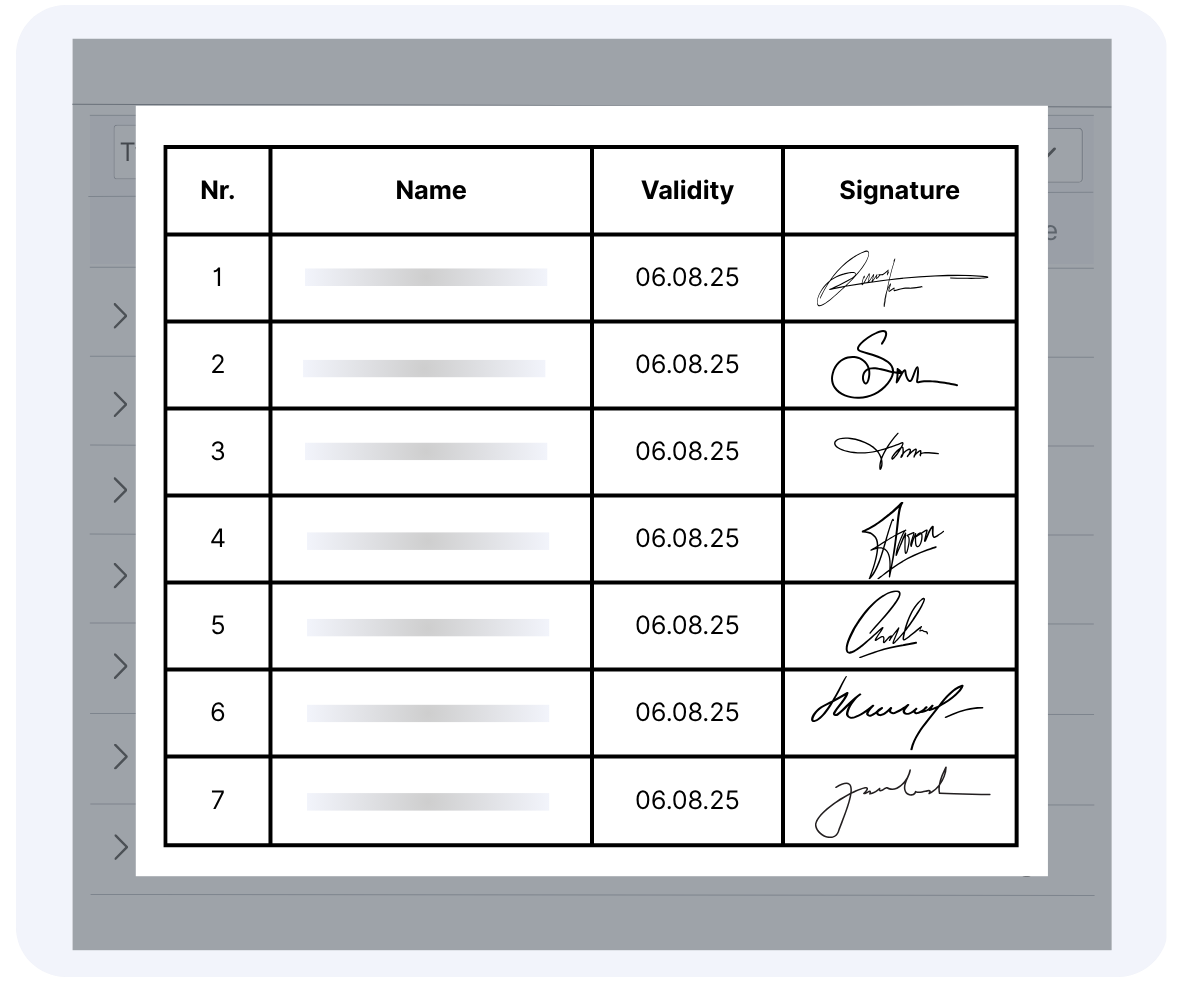
Training must be organised and documented. Qualifications must be kept current. Expiring records must be identified. Before an audit, the relevant documents must be easy to find.
Excel files, paper and multiple disconnected systems create a continuous administrative burden.
The calculator therefore distinguishes between three areas:
Training administration
Skills matrix
Audit preparation
Training administration: How much time is spent managing participation, signatures and missing training records?
Skills matrix: How many hours are spent each week on updates, reconciliation and expiry monitoring?
Audit preparation: How many person-days are needed to compile qualifications and records before an audit?
In an integrated system, qualification records are generated directly from completed training and instruction. Validity periods can be monitored and records linked directly to employees and competencies.
A manually maintained Excel matrix becomes a continuously updated overview of workforce qualifications.
The financial impact:
Less administrative effort and faster access to evidence for audits and compliance.
Training takes time even after delivery
Assume 300 production employees with an average of three training sessions per year. At just ten minutes of administration per session, this creates:
This includes participant lists, signatures, records, missing training and deadlines. It also includes maintaining the skills matrix and compiling evidence before audits.
Many of these tasks can be automated digitally: documenting participation, updating qualifications, monitoring deadlines and providing evidence on demand.
LEANBYTE IN PRACTICE
From training directly to qualification records
Leanbyte combines instruction, training and qualifications in one system. Completed content is documented, qualifications are updated and upcoming training requirements become transparent.
This creates an up-to-date skills matrix with traceable evidence, without Excel lists or manual document searches before an audit.
Turn operational problems into a business case
All six examples have one thing in common:
The problems are visible in everyday production, but their financial impact often is not.
Three questions are enough for an initial assessment of your plant:
1. Onboarding
How many productive days do we gain when employees reach target performance sooner?
2. Documentation creation
How many working hours do we gain
when work instructions are created
and updated faster?
3. Disruptions
How many hours of downtime do we avoid when known solutions are available faster?
Only after these figures are known should the next question be asked:
How much should a solution that improves part of this be allowed to cost?
This turns a software discussion into an evidence-based investment decision.
Calculate the savings potential for your production
The actual size of these effects depends heavily on the individual plant.
A company with high staff turnover has a different business case from a plant with many complex machines. An automotive supplier with numerous audits has different cost drivers from a company where many experienced specialists will retire in the coming years.
That is why our calculator does not make a blanket ROI promise.
You can adjust the key production parameters yourself and switch individual categories on or off.
This shows you which cost blocks matter in your plant and what annual savings potential they can create.
- where the greatest financial opportunities lie in your own plant,
- what onboarding, information retrieval and disruptions cost today,
- which levers have the greatest impact,
- and whether the scale of the opportunity justifies an investment.
No black-box calculation
Benchmarks include their sources. Assumptions are clearly identified. You can replace the preset values with your own production data at any time.
Instead of a generic vendor ROI claim, you receive an initial financial assessment of your own plant.
What do these levers cost in your plant?
Use your own production data or start with the included benchmarks. In just a few minutes, you will obtain an initial estimate of the financial potential.
✓ Free of charge.
✓ Transparent.
✓ No obligation.
Frequently Asked
Questions (FAQ)
1 How accurate are the production benefit calculator's results?
The calculator is based on validated industry benchmarks, such as typical onboarding periods of four to eight weeks, information search effort and MTTR values. It clearly distinguishes between conservative, realistic and optimistic scenarios. When you enter your own figures, such as hourly rates, employee numbers and disruption frequency, the results accurately reflect the conditions in your plant.
2 What data do I need to enter for the calculation?
You can start immediately with the included default values or enter key parameters: the number of employees onboarded each year, average search times on the shop floor, and the number and duration of typical machine disruptions. No sensitive trade secrets are required.
3 Is the benefit calculator really free and non-binding?
Yes. The benefit calculator is completely free to use and involves no contractual commitment. You immediately receive a transparent overview of your key levers and financial improvement potential.
4 How exactly does Leanbyte help unlock this potential?
Leanbyte combines process recordings, videos and documentation with generative AI. This produces multilingual, digital step-by-step work instructions and an intelligent knowledge base for the shop floor. Employees find solutions in seconds instead of minutes, and new colleagues reach target performance significantly faster.
5 How much effort does it take to introduce Leanbyte in a plant?
Because Leanbyte uses existing videos, documents and standard hardware, such as current tablets or terminals, and provides intuitive user interfaces, months of preparation are unnecessary. Initial pilot areas can be made productive within a few days.
From potential to implementation
Leanbyte turns production knowledge from videos, technical files, existing documentation and employee experience into operationally useful content. AI transforms it into digital work instructions, training content and knowledge that is immediately available on the shop floor.
Operational Knowledge Management means capturing knowledge once and making it available wherever it accelerates onboarding, reduces search time and helps resolve disruptions.